

ABOUT
Background
Rapid advances in AI promise efficient and productive futures, yet they also pose threats when they erode the critical and reflective capacities that define us as Homo sapiens. The coexistence of humans and AI requires rigorous ethical, philosophical, and pedagogical inquiry, as well as the careful design of modes of coexistence that preserve, rather than diminish, our shared humanity. The integration of AI into everyday life has introduced significant challenges of widening economic and social gaps, particularly through unequal access to and use of AI technologies. In this context, civic engagement and social inclusion are indispensable for sustaining our society.
There is also growing concern that societies may shift from being governed by reason and reciprocity to being dominated by power and self-interest. Preparing the future generation to become civic-minded and socially responsible citizens capable of sustaining a rational and coexistent way of life is an urgent imperative. Children and youth need meaningful opportunities to learn and experience civic values concretely in both public schooling and everyday life. Civic and social capacities such as empathy, responsibility, cooperation, and commitment to the common good do not arise spontaneously. They are cultivated through intentional, systematic educational experiences.
The cultivation of civically responsible citizens who embody humanity, human dignity, multicultural respect, social solidarity, and inclusion is a shared responsibility of schools and communities. Together, they must create rich spaces of learning and experience in which children and youth can learn civic values and social norms and practice civic and community engagement.


Generated by ChatGPT
Keynote
Speakers

Former Deputy Prime, Minister of Korea
Emeritus Professor, Seoul National University
Professor Shin-il Kim is Professor Emeritus in the Department of Education at Seoul National University and a leading scholar in the fields of the sociology of education and lifelong learning. He previously served as the 50th Deputy Prime Minister and Minister of Education and Human Resources Development of the Republic of Korea, as well as the 37th President of the Korean Educational Research Association (KERA).
Throughout his career, Prof. Kim has worked to bridge academic scholarship and educational policy while contributing to discussions on the future direction of Korean education. In particular, he has contributed significantly to the development of the learning society discourse and its integration into national lifelong learning policy. His work has helped expand educational perspectives in Korean society from a school-centered model toward a comprehensive lifelong learning system.
Shin-il Kim
Former President, Korean Educational Research Association
Vice-Chairman, The Korean National Commission for UNESCO
Professor Seong-yeol Kim is Emeritus Distinguished Professor in the Department of Education at Kyungnam University and a scholar widely recognized for his contributions to educational administration and educational policy. He served as the 43rd President of the Korean Educational Administration Society (KEAS) and the 44th President of the Korean Educational Research Association (KERA).
Currently, Prof. Seong-yeol Kim serves as Chairperson of the National Institute for Lifelong Education (NILE) and Vice-Chairperson of the Korean National Commission for UNESCO. Drawing on his extensive academic research, he has contributed to the development of lifelong learning systems, provided policy advice on the national curriculum, and participated in international discussions on educational cooperation. He is recognized for bridging educational administration research with public educational policy.
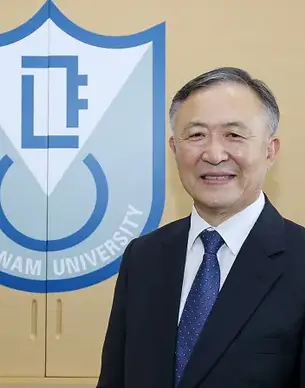
Seong-Yeol Kim

TBD
TBD

Schedule
6. 24. Wed

6. 25. Thur

6. 26. Fri

※ Note: The schedule may change depending on the number of submissions. The conference start and end times are fixed.
Registration
Registration Period
-
Early Bird applicants pay the discounted rate; all others pay the regular rate.
-
GELYDA members can register at the Early Bird rate regardless of the registration period.
-
For hybrid registration, the fee is the same for both presenters and participants.
-
Please register as domestic or international based on your affiliated institution.
Category Period (KST)
Early Bird Registration Open - Mar. 31, 2026
General Registration April 1, 2026 - May 31, 2026
____
* Bank transfer open: March 4, 2026
* Credit card payment available: April, 2026
Registration Fee
* Calculated at KRW 1,500/USD (as of March 20)
Virtual Registration Information
Participation
-
Hybrid registration is for participants attending remotely
-
All sessions are conducted live via Zoom in an interactive format
-
Participants may present live (no pre-recorded presentations) and join Q&A sessions
-
Access is provided to keynote sessions, parallel sessions or symposia, as well as the opening and closing sessions
Access Information
-
Zoom access details will be shared with hybrid participants
-
Detailed session schedules, including Zoom access by time slot, will be available in the conference proceedings
Registration Payment
-
Online Credit Card Payment (Credit card payment available: April, 2026)
Payment by credit card is possible only through the online registration system.
The following credit cards will be accepted: VISA, Master, JCB and AMEX.
(Please clearly state your credit card information.)
Please use your own credit card. The actual amount charged may differ according to the exchange rate. -
Bank Wire Transfer (Bank transfer open: March 4, 2026)
Payments should be transferred to the following bank accounts.
All bank charges are the responsibility of the applicant.
The transfer must be in the registrant’s name and must be stated on the receipt.
Please send a copy of your bank remittance receipt to the secretariat email(2026.gelyda.conference@gmail.com)
※ 한국인 참가자의 경우, 계좌이체 이용을 권장드립니다.
How To Register
-
To register for the GELYDA conference, either in person or virtually, please click the link below:
https://www.manuscriptlink.com/conferences/gelyda2026
-
You will be directed to our Abstract Submission and Registration page. You will need to create an account if you have not already done so.
-
Once logged in, please click the “Payment” tab in the upper right-hand corner to complete your registration and payment.
-
Bank transfers are currently available. Credit card payments will be available in April.
Cancellation & Refund Policy
-
Cancellations made 31 days or more before the conference: 100% refund of the registration fee
-
Cancellations made 30–8 days before the conference: 50% refund of the registration fee
-
Cancellations made 7 days or less before the conference (including the conference day): No refund
WOORI BANK
17, WORLD CUP BUK-RO 60-GIL, MAPO-GU, SEOUL, 03921, SOUTH KOREA
The Korean After-School Study Association
1005-802-953505
HVBKKRSEXXX
International
Domestic
Name of Bank
Address
Account holder
Account No
SWIFT(BIC) code
우리은행 1005-802-953505 한국방과후학교학회
Travel
Information


Seoul is a city where centuries-old tradition blends seamlessly with cutting-edge modern culture—an experience that’s hard to find anywhere else in the world. Just steps away from the royal palaces where Joseon kings once walked, you’ll find futuristic skyscrapers and vibrant neighborhoods buzzing with creativity. Even amid the fast-paced energy, nature is never far away, with serene parks and mountain trails easily accessible from the city center.
But Seoul’s charm goes far beyond its scenery. You can start your day sampling Korean street food in bustling districts like Myeongdong or Hongdae, then transition into the evening with an elegant Korean fine-dining experience in Hannam-dong or Cheongdam. Whether you're shopping, exploring historical sites, discovering local art, or spending a fun-filled day at a theme park, every moment in Seoul feels like stepping into a different world.
As the political, economic, and cultural heart of Korea, Seoul brings together people from all regions and backgrounds, creating a dynamic atmosphere full of stories and inspiration. Fueled by the global rise of K-culture, the city continues to grow as a leading international destination—one that surprises visitors with something new every time.


